2024
WORK IN PROGRESS
Redefining Boundary Alex O'Riain
David Bell
Maintenance and Care Donie Mullally
Oisin Fee
Samira Cramm
BRIEF
WORK IN PROGRESS
Redefining Boundary Alex O'Riain
David Bell
Maintenance and Care Donie Mullally
Oisin Fee
Samira Cramm
BRIEF
The ‘as found’ […] is in the picking up, turning over and putting with.
A&P Smithson, ‘The ‘as found’ and the ‘found’’, 1990
A&P Smithson, ‘The ‘as found’ and the ‘found’’, 1990
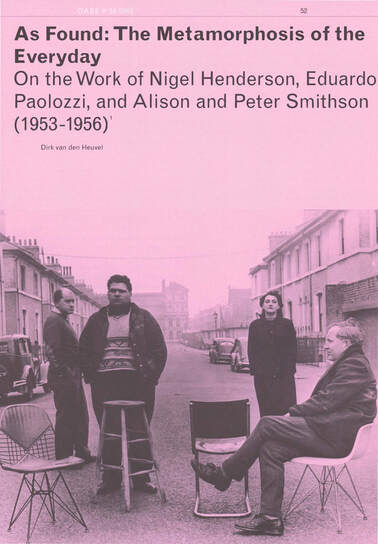
The Architecture+Technology Unit explores the capacity of technology to respond to present-day problems through architectural design, this semester through the theme AS FOUND. The use of this term in architecture was coined by Alison Smithson who writes:
|
Setting ourselves the task of rethinking architecture in the early 1950s we meant by the as found not only adjacent buildings but all those marks that constitute remembrancers in a place and that are to be read through finding out how the existing built fabric of the place had come to be as it was. Thus, as found was a new seeing of the ordinary, an openness to how prosaic things could re-energise our inventive activity.
Alison Smithson |
|
In this description, Smithson outlines a process of seeking out and recognising things that are useful as the basis of making projective work in art and architecture. The thinking was developed in association with the work of the Independent Group of artists and architects in the 1950s who made work that enjoyed openness, was fragmentary and expressed traces of the process that led to its creation.

|
In this unit, we propose an expansion of the found in as found. For us, the theme signifies an approach to design that actively engages not only with found objects but also conditions that can be ‘picked up, turned over and put with’ to paraphrase Smithson. The objects we might consider are raw materials, building components, existing buildings or spatial structures, and we wish to consider conditions such as climate, demography, employment, flooding, economy, economics, traffic, etc. We see these objects and conditions as design actants, that is to say, we acknowledge their ‘agency’ as primary in design decision-making. This is similar to the approach taken in Bruno Latour’s actor-network theory which invites us to ‘follow the actors themselves’ in order to understand complex situations, to look closely at the conditions at play and allow them to lead our design thinking instead of imposing an externally formed solution.
|
The meaning of the term technology is not defined by the Unit. The objects and conditions outlined above embrace a range of technologies from the constructive aspects of architecture to computational design, AI and other systems-related technologies. We encourage each student to place their work within the technological thinking, high or low, that is appropriate to their project’s development, allowing it the kind of agency we refer to above.
The theme is broad and meant as a provocation rather than an obligation. Students are not expected to stick slavishly to it but are invited instead to use it as a prompt for individual exploration, not only in terms of design interest but also in terms of individual site choice and scale of intervention.
|
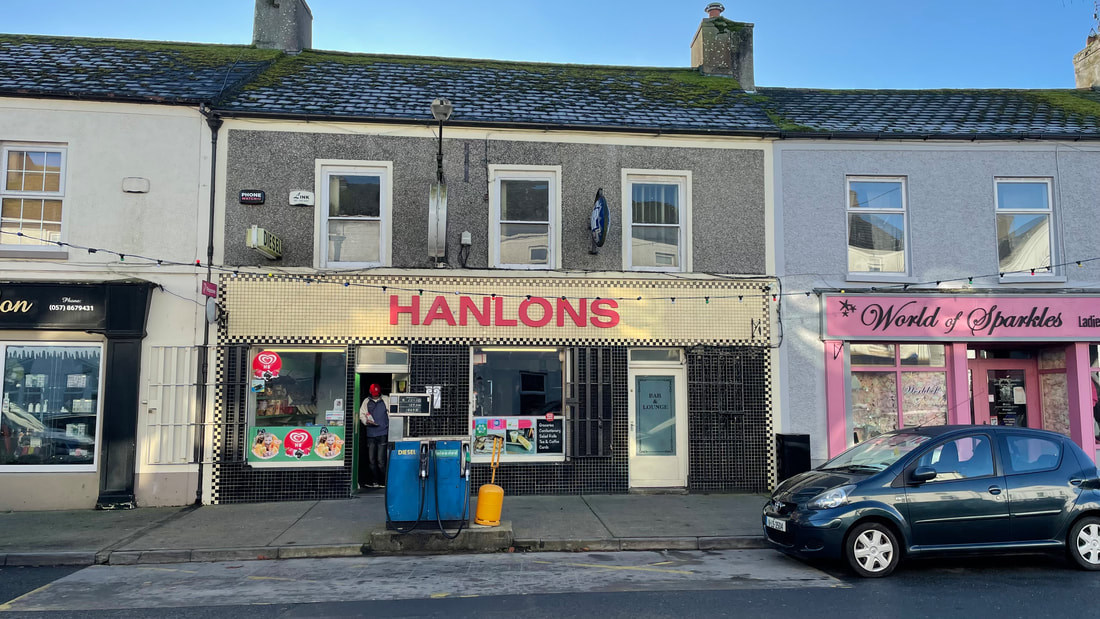
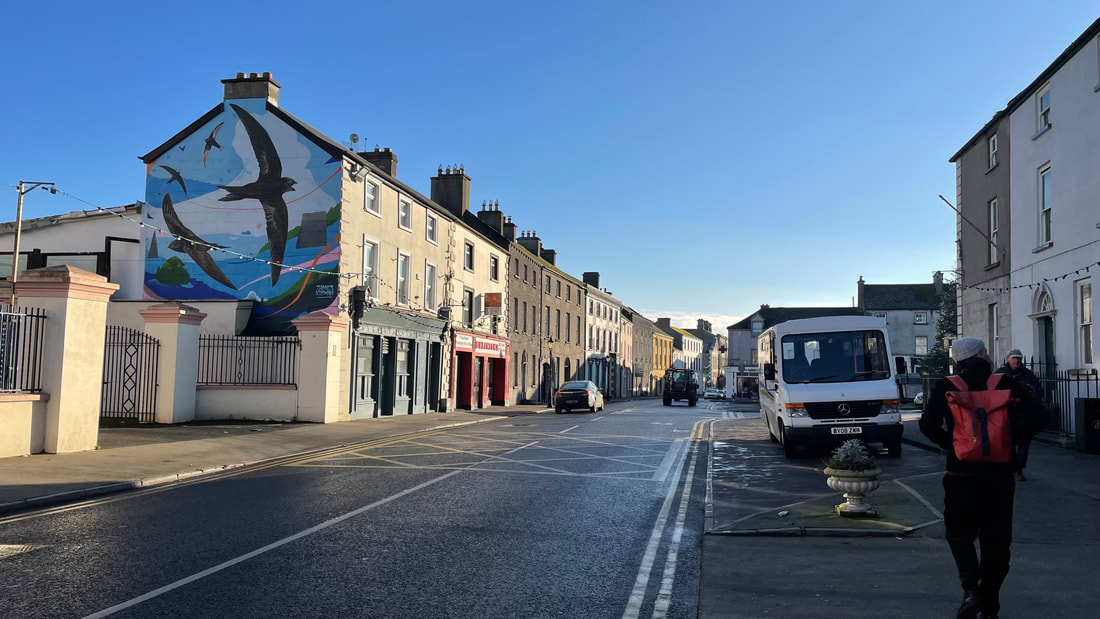
Our projects this semester will be located in Mountmellick, Co Laois. It is important to state from the outset that the objective of this Unit is not to fully ‘resolve’ the town and all the issues it might have. In fact, the town is chosen partly because it has already been the subject of study under the Freemarket project (2018-19), thus relieving the group of this task. Instead, students are invited to place their research interests in the ‘as found’ of the town and its locality, in the ordinary and particular objects and conditions that prevail there, to pick them up, turn them over and put them with their own research focus, allowing this to direct an architectural design project.
|
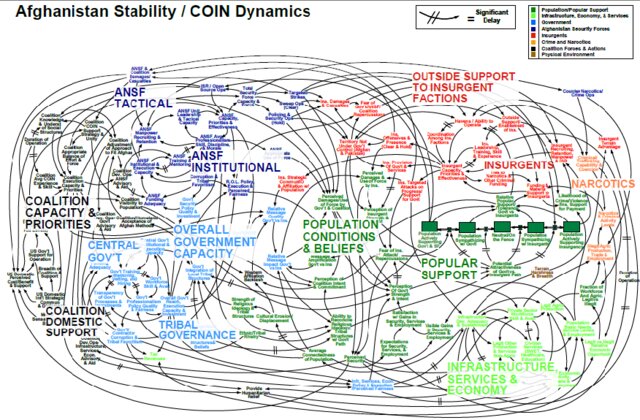
US military General Stanley McChrystal: "When we understand that slide, we'll have won the war"
|
Mapping the TerrainThe projects will be developed in three stages over the semester. In Mapping the Terrain (Weeks 1-4) you will investigate the ‘as found’ of the place, the objects and conditions that prevail. Examples of these might include the material conditions of existing buildings (historical and new) and their performance, the local traffic and transport infrastructure, relationships between the town and its periphery or hinterland, the place of water in the town, the local economy and social provision in the town. Methodological approaches such as systems thinking (GST) and actor-network theory will be discussed. By the end of this four-week period a design problem, context, and intervention are formulated.
In the first four weeks of this project you are asked to:
Week 1 Contact Day: Thursday 25 January Weekly Assignment:
By Friday 26/1 Weekly Reflection submitted through website: 50 words approx. and at least one speculative image/drawing /map that begins to consolidate the relationship between your research interest and a matter of concern for Mountmellick. Week 2 Contact Day: Thursday 1 February Weekly Assignment: Trip to Mountmellick: Meet 10am Mountmellick Development Association (Eircode R32AOPK) Visit of areas of interest in town with some local experts. Recording (notes/photos/sketches) of relevant findings. Trip ends late afternoon. Mode of transport t.b.c. in studio. Output: By Thursday 8/2 Weekly Reflection submitted through website: 50 words approx. and visual material that interprets your visit relative to your research interest. Week 3 Contact Day: Thursday 8 February Weekly Assignment: Design Research Tutorial: Focussing your research development towards a design idea Output: By Thursday 15/2
Week 4 Contact Day: Thursday 15 February Weekly Assignment: Review (with experts and reviewers) Output: See previous week Some Initial Matters of Concern for Mountmellick (please note this list is not definitive but should get your thinking started): Infrastructure:
|
Locating your PositionThe following three weeks of the project – Locating your Position (Weeks 5-7) – are dedicated to embarking upon design projects focussed on the position papers. At the end of this stage of the project, a design response will have been formulated.
Week 05-07 Design Tutorials (model, drawing and material testing as methods) |
|
|
Crossing the TerrainDuring the final stage – Crossing the Terrain (Weeks 8-13) – the projects are developed allowing the idea at the centre of the explorations to manifest themselves across all aspects and scales of the designs and also to inform the way in which they are represented.
Week 08 Context Review (with experts + reviewers) Week 09 Debriefing Tutorials, Consolidation and Development Week 10-12 Design Tutorials Week 13 Reading Week (independent work) Week 14 Final Review (with external experts + reviewers) |
